Gender based violence has been recognized as an international public health and human issue. It can be sexual, physical, mental and economic harm inflicted in public or in private, it also includes threat of violence, force and manipulation. Gender based violence undermines a person’s sense of self-worth and self-esteem. It affects not only physical health but also mental health and may lead to self-harm, isolation, depression and suicidal attempts. Although campaigns and programs to end Gender Based Violence (GBV) have intensified backed with legislation and punishment for offenders, but the crime still persists due to lack of awareness, strong cultural practices, existence of gender inequalities and social norms that fuel its occurrence.
Gender based violence is in most cases not reported to the authority as most survivors fear the discrimination and shame they will face after their abuse is reported and known by other people in the society. This has affected the provision of assistance, help and support services, thereby exposing the abused person to greater harm, long life repercussions for survivors and possible deadly consequences like suicide or murder. It also has a heavy economic down side to it as it makes survivors underachieved at work and in education, and it negatively affects their productivity. Individuals, organizations both private and public have different roles to play in creating awareness against gender-based violence.
These include:
- Individuals have a big role to play first to prevent GBV through education of friends, family and a host of people around them on the dangers of gender-based violence, ending stigma and discrimination of victims of gender-based violence, supporting of survivors to access services and report GBV incidence to the designated authorities. It is important that individual make a commitment against GBV.
- Communities play a frontline role in preventing GBV especially in families and community groups. Educating members of the community is essential. Men and women are sensitized on GBV and on other methods of handling conflicts or disagreements including dialogues. Community leaders have a role to play in role modelling and reporting of incidence including ensuring perpetuators are punished.
- The Media is a powerful vehicle for mass education and communication. It has a primary role of educating the public on the demerits of GBV and helping citizens to be well informed to prevent GBV. Using the powerful instrument of the media, the public is educated on the provisions of the laws and conventions addressing gender inequalities and GBV including the Violence against People (VAPP). The media amplifies the voice of victims by bringing to the fore injustices, educating them on the dangers of not speaking out.
- Non-Government Organizations has a front-line part to play in educating the public and communities. The NGO is part of the community, delivering life transforming programmes to improve the well-being of citizens. NGO in their programmes target adolescents, youths, women and men, boys and girls – all of different age ranges to ensure GBV occurrence ends.
Based on the understanding of the role of NGO, HEARD Africa a brain trust national NGO organization located in Abuja Nigeria to up the challenge of ending GBV as part of its activities during the International Day of the Girls Child 2022 with theme “Our time is now-our rights, our future.
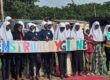
HEARD Africa achieving her mission of inspiring an all-inclusive transformation in the lives of most vulnerable population across Africa; organized an outreach and creative programme on preventing gender-based violence in Junior Secondary School, Duste Alhaji II in collaboration with the FCT Universal Basic Education Board. The HEARD Africa Team was led by its Executive Director Ms Akaoma Onyemelukwe in implementing the programme.
Akaoma Onyemelukwe in her interview shared the objectives of the outreach which is to educate the young adolescents from ages 10-14 years on what gender-based violence is, its types, causes, how to prevent and identify GBV, what to do in the event of GBV as well as the application of GBV confidential screening tools. The outreach is to educate the children who will take the messages home to their parents and make them advocates and champions for the prevention of the GBV. The young adolescents are expected to start early to learn lifesaving skills for entrepreneurial use. A creative session on how to make hair fascinators was demonstrated.
The program reached 100 students with 7 teachers who were sensitized on what gender means and GBV. The GBV screening tool was introduced and handed over to the teachers. HEARD Africa will adopt the Junior Secondary School, Duste Alhaji II for more Gender focused programing. A major next step is the establishment of Gender and Creative Club in the School to help deepen the knowledge and skills of the students on the gender equality and social inclusion topics.
Written By: Ifechukwude Jideonwo for HeardAfrica.